How to Recycle Soft Plastics in Australia (2026 Update)
It might be hard to believe, but Australians use around 70 billion pieces of soft “scrunchable” plastic every year. That is, as you can imagine, quite a headache to recycle. This headache was made much worse by the collapse of REDcycle in 2022, a soft plastics recycling company that was doing the bulk of Australia’s soft plastic recycling before it closed down.
What we've been left with is a lot of outdated online information and general confusion around the correct way to recycle soft plastic. We’re writing this guide to provide a clear source of fact-checked information so that you can recycle your soft plastics correctly.
Because trust us when we say, the problem hasn’t gone away.
What Counts As Soft Plastic?
The most universal definition for soft plastics is this: If you scrunch it into a ball in your hand and it stays scrunched, it’s soft plastic. If it springs back, it’s rigid and belongs in the yellow bin. That definition includes items such as:
-
Bread bags
-
Cling wrap and plastic film
-
Chip packets and lolly wrappers
-
Pasta and rice bags
-
Bubble wrap
-
Frozen veg bags
Now, you might be thinking, “Wouldn’t it be lovely if soft plastics could also just go into the yellow recycling bin?” – the answer is yes, that would be lovely.
Unfortunately, the reality is that soft plastics are a beast to recycle. They get tangled in conveyor belts and sorting machinery at Materials Recovery Facilities (MRFs), even shutting down entire processing lines and contaminating other recyclables as a result. This is why kerbside recycling has never accepted them – and probably won’t anytime soon.
The Current State of Soft Plastic Recycling
Soft plastic recycling in Australia is (finally) starting to get some of the much-needed attention it deserves. In this section we’re going to look at what has happened, what is being done about it, and we’ll talk about the gaps that still remain.
The REDcycle Debacle
When REDcycle collapsed in November 2022, it left a gaping hole in our soft plastic recycling infrastructure, having been Australia’s only national soft plastics scheme for over a decade.
This is the short version for those who don’t already know: There was a fire at the factory of one of REDcycle’s main processing partners. REDcycle, already under enormous strain from the sheer volume of soft plastics they needed to recycle, couldn’t keep up. Instead, they didn’t tell anyone they couldn’t cope anymore and simply kept accepting soft plastics – without recycling them. The plastic sat in warehouses all over the country until the truth came out and pulled the company under, leaving about 11,000 tonnes of the stuff unprocessed. Not good.
How You Can Recycle Soft Plastic Now
After a few years of relative inaction, new processes are now being designed and implemented to deal with soft plastic recycling.
In November 2025, the ACCC granted an 8-year authorisation to a new industry body, Soft Plastic Stewardship Australia (SPSA). SPSA is rolling out a national scheme to tackle soft plastic recycling, focusing on creating adequate processing infrastructure before asking for everyone’s soft plastics (a hard-learned lesson from REDcycle).
As of May 2026, supermarket soft plastic recycling bins are making a bigger and better comeback. Woolies has rolled this initiative out to 700 of their stores across NSW, ACT, VIC, QLD, and SA. If you live in one of those states, click this link to find a store that will recycle your soft plastics.
Another option is to use ReSmart (formerly RecycleSmart). ReSmart collect a whole host of different waste items that don’t fall into the standard recycling category, with soft plastic removal being their main service.
Although progress is happening, there’s still work to be done, with 30% of Australians having no real alternative to putting their soft plastics in the landfill bin. But with formal regulatory oversight, funding from manufacturers, and increased processing capacity we have genuine reason to be hopeful – yay!
How to Set Up Soft Plastic Collection At Home, Work, Or School
Having a place to take your soft plastics to is a massive step in the right direction. But you still need somewhere to collect your soft plastics before taking them to the shops. This is the crucial part, because separating your soft plastics is the all-important first step toward having them recycled.
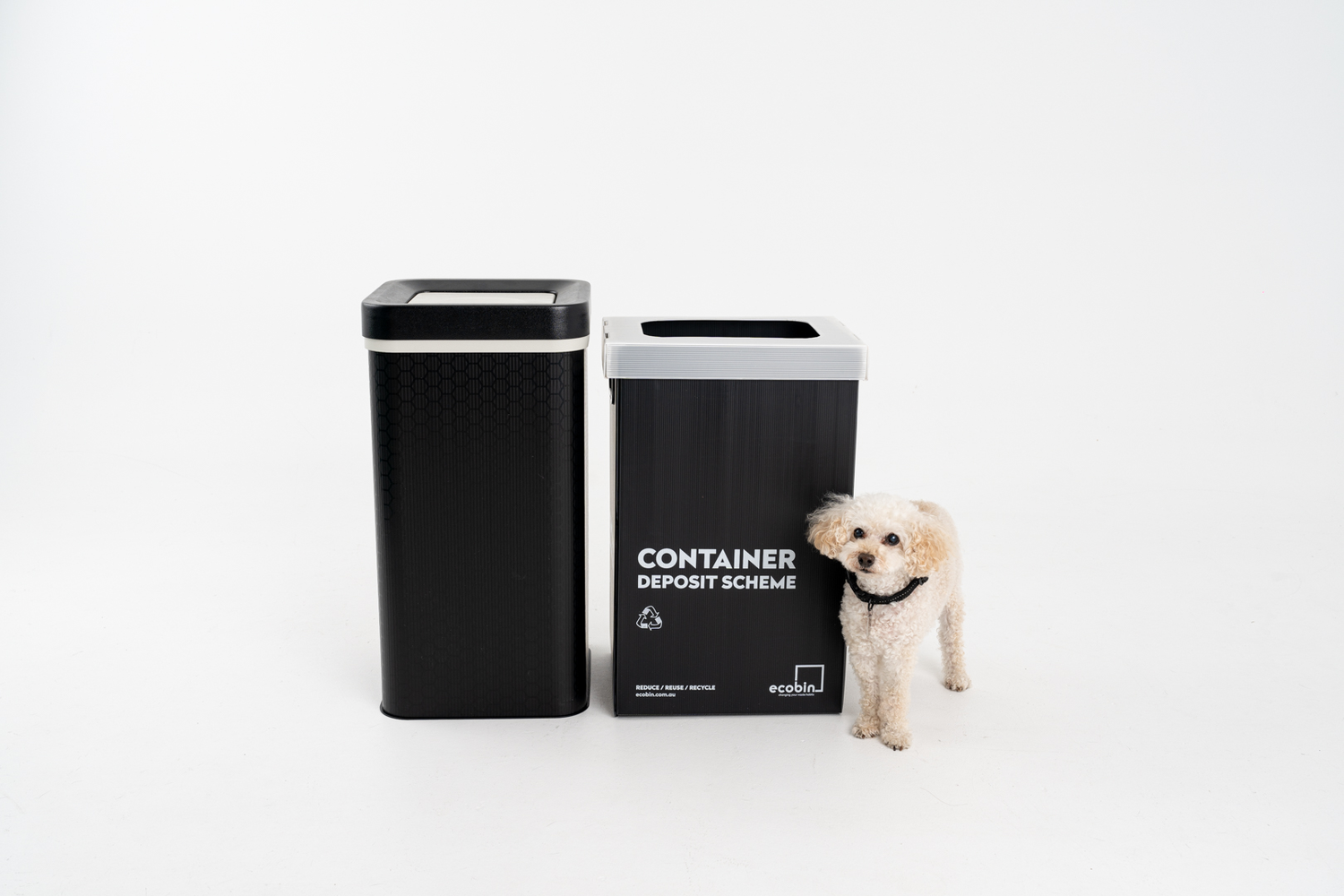
This is where Ecobin comes in. Our colour-coded bins are specifically designed for easy waste separation at the source. And before you ask, yes we even sell dedicated soft plastic bins.
At Home
Most soft plastic waste comes out of regular households just like yours and mine. Here are some pointers for soft plastic recycling at home:
-
Have a single, dedicated soft plastics collection point at home. All the soft stuff goes there.
-
Some handling rules: give bags and packets a shake. Get all those breadcrumbs and chippies out. Doesn’t need to be spotless, just passable.
-
Scrunch your plastic into a ball before dropping it in – this makes transport easier.
-
Aim for a monthly drop-off. Set a reminder in your calendar. Seriously!
At Work
Offices generate a lot more soft plastic than most people realise. Things like delivery packaging, food packaging, bubble wrap – all that jazz.
-
Have a colour-coded collection station in the breakroom or near the office printer, ideally alongside your existing recycling and landfill bins (which we’re sure you would already have set up).
-
One training, one email, one announcement. Just make sure everyone knows what the new white bin is (and isn’t) for.
-
Assign someone to drop-off the goods monthly.
At School
Schools can make a massive impact on soft plastic recycling. Almost every lunchbox will have some soft plastic inside, and teaching kids about this overlooked form of recycling is vitally important.
-
Classroom collection bins are a great option. Hallway bins are a close second.
-
Tie it into the curriculum if you can. Waste audits and environment days help drive attention to the issue. Eco Schools Australia have some great frameworks for this.
-
The sheer volume of soft plastics means weekly or bi-weekly drop-offs are a must.
Where to Take Your Soft Plastics
Once you've got a collection system humming along, here are your three main options for dropping soft plastics off:
-
Supermarket bins – mainly Woolworths for now, with Coles and Aldi expanding their programs.
-
ReSmart doorstep pickup – the easiest option if you're not near a participating supermarket.
-
Council kerbside trials – a handful of councils are running their own pilots. Curby on the NSW Central Coast leads the charge, with several Queensland councils (Brisbane, Sunshine Coast, Cairns, Goondiwindi) also on board. Check your local council's website to see if they've joined in.
Conclusion
The plastics may be soft, but they leave very hard problems. The important thing to know is that little actions – made at home or the office or at school – actually do add up. By doing your part and telling a friend, you’re helping everyone, and you should feel good about that. We hope this guide has been helpful, check out some of our FAQs below, and don’t forget to grab yourself an Ecobin!
Frequently Asked Questions
Is Woolworths still taking soft plastics?
Yep, and bigger than ever. As of May 2026, Woolworths has soft plastic collection bins in over 700 stores across NSW, VIC, QLD, SA and the ACT. Bins are usually right at the front of the store. Just make sure your plastics are clean and dry before dropping them off – contamination is still the enemy.
Is Coles still recycling soft plastics?
Yes, Coles is in on the action too, as part of the same Soft Plastics Taskforce. Their rollout has been a bit slower than Woolies, so participating store numbers are still growing. Check the Coles website to find a participating store near you before you head in.
Does Aldi recycle soft plastics?
Aldi's also part of the Soft Plastics Taskforce, with collection bins at select stores. Their footprint is smaller than Coles and Woolies, so availability really depends on where you live. As always, check before you go to save yourself a wasted trip.
Can cling wrap be recycled?
Yes! Cling wrap is a classic soft plastic – passes the scrunch test with flying colours. The only catch is it needs to be clean and dry. Cling wrap covered in pasta sauce or last night's leftovers will get rejected. Give it a quick wipe down before tossing it in.
Can bubble wrap be recycled?
Absolutely. Bubble wrap is soft plastic and can be recycled through the same programs. One tip: pop all the bubbles before you drop it off (or hand it to a kid – they'll do it for free). Flattened bubble wrap takes up way less space in your collection bin.
What's the difference between hard and soft plastics?
The scrunch test, one more time for the people up the back. Squeeze the plastic in your fist – if it stays scrunched, it's soft plastic. If it springs back to shape, it's rigid (hard) plastic. Soft goes to a soft plastics collection point. Rigid goes in the yellow bin. Easy.